
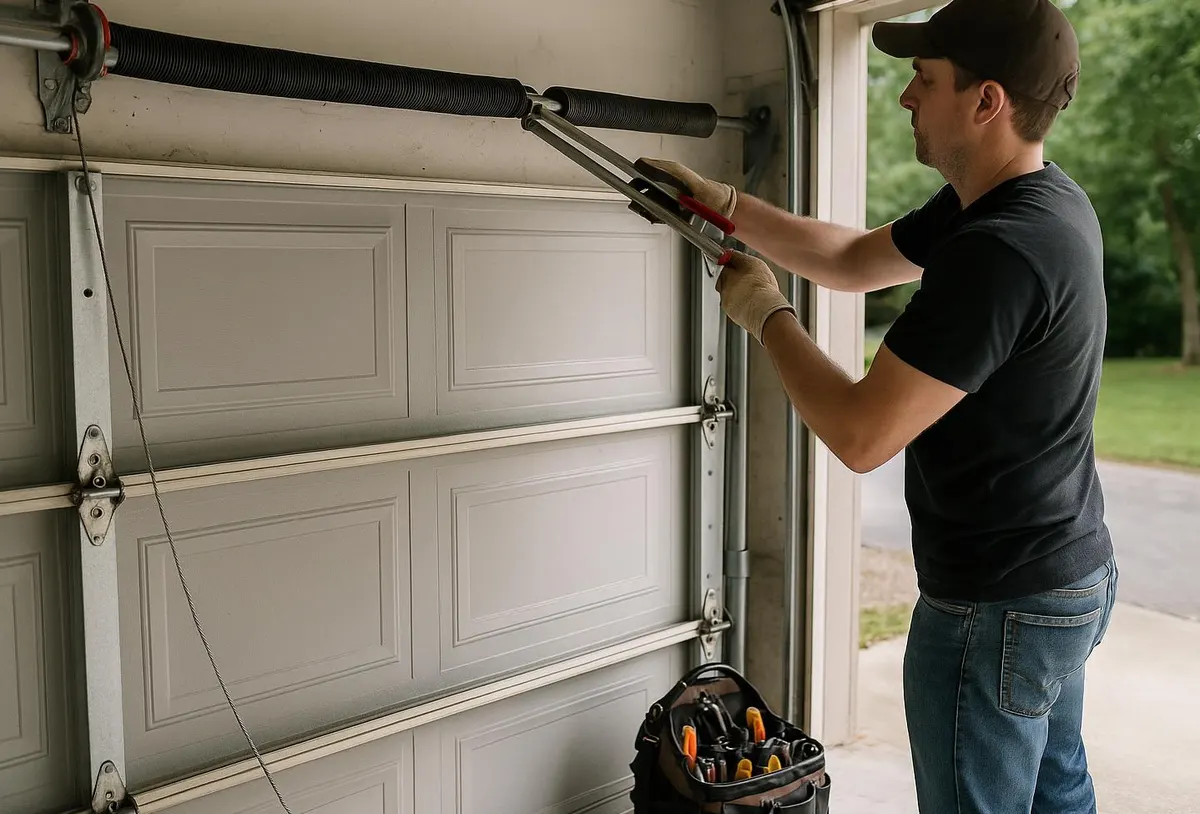
What a Technician Sees on a Typical Call
A homeowner near US 17-92 calls about an opener that suddenly stopped working. Nine times out of ten, the opener itself is fine. What's actually happened is the springs have weakened over time, the door got heavier for the motor to lift, and the opener kept straining against that extra weight until the gears stripped or the motor burned out. The opener gets blamed, but the real problem started months earlier with a balance issue nobody noticed.
What an Unbalanced Door Does to Your Opener
Your garage door opener is built to do one job: move a door that's already properly counterbalanced by its springs. It's not designed to lift the full weight of the door on its own. When springs weaken, stretch, or go out of adjustment, the opener starts compensating — pulling harder, running hotter, and wearing down its gears faster than it should. Over time this shows up as a opener that strains on the way up, reverses unexpectedly, or stops working altogether. A $20 spring adjustment problem can turn into a $300+ opener replacement if it's ignored long enough.
Tools You'll Need
- A sturdy step ladder
- Work gloves
- Nothing else — this test doesn't require touching the springs or cables
How to Test Garage Door Balance
- Close the door completely. Start from a fully closed position so you have a clean baseline.
- Disconnect the opener. Pull the red manual release cord hanging from the trolley. This takes the motor out of the equation so you're testing the springs, not the opener.
- Lift the door by hand to about waist height. Use both hands and lift slowly and evenly.
- Let go and watch what happens. A properly balanced door will stay put or drift down slowly on its own. If it slams down or shoots upward, the springs are out of balance.
- Repeat the test at full open. Lift the door the rest of the way and let go again. It should hold its position without you holding it.
- Listen while you lift. Grinding, popping, or a loud bang from the spring area are signs of a spring problem, not just a balance issue.
- Reconnect the opener by pulling the release cord again until it locks back into the trolley, then test with the wall button or remote.
What You Can Safely Check vs. What Needs a Technician
Homeowners can safely run the lift test above, do a visual check for obviously frayed or rusted cables, and listen for unusual noise during operation. That's where it should stop.
Garage door springs are wound under extreme tension — enough to cause serious injury if they release unexpectedly. Adjusting spring tension, replacing a broken spring, or repairing a frayed cable are jobs that require the right tools and training. If your test shows the door is out of balance, that's the signal to call for repair, not to start turning winding cones yourself.
Why This Matters More in This Climate
Humidity and heat here cause wood and composite door panels to swell slightly, which adds drag and can make a door feel unbalanced even when the springs are fine. After a season of storms and heavy afternoon downpours, tracks can also shift slightly out of alignment, which throws off how the door sits even if the spring tension hasn't changed. It's worth running this balance test now, before the drier months settle in, so you know whether you're dealing with a spring problem, a track problem, or just seasonal swelling.
When to Call Haines City Garage Door Pro
If your door slams, shoots up, or the opener sounds like it's working harder than it used to, call us before the opener takes the damage. We'll run a full diagnostic, and depending on what we find, that might mean Garage Door Spring Repair to restore proper counterbalance or Off Track Door Repair if storm-related shifting is the real culprit. Either way, we'll tell you honestly what's wrong and what it'll take to fix it — no guessing, no upselling.
If your garage door failed the balance test, don't wait for the opener to fail too. Call Haines City Garage Door Pro today and get it fixed right the first time.