
The Moment You Notice It
You walk into the garage-turned-home-gym on a Tuesday evening, and there it is: a damp sheen on the inside of the garage door panel, right behind the squat rack. Or maybe it's a faint rust line creeping along the bottom weld, or the door making a grinding sound every time it tries to close because a shelf unit is two inches too close to the track. Your spouse says it's nothing. You're pretty sure it's not nothing. This is usually the argument that happens before anyone calls a repair company.
Here's the honest answer: converting a garage into living space, a gym, or a workshop doesn't make the garage door disappear. It's still there — behind the drywall, under the paint, or just standing closed 300 days a year — and it keeps reacting to heat, humidity, and whatever gets stacked against it, whether or not anyone's parking a car in front of it anymore.
What Actually Happens Behind the Wall
A lot of homeowners frame over the garage door opening, hang drywall, and call it done. The door itself often stays in place behind that wall rather than getting removed, partly because taking it out and properly closing in the opening is a bigger structural job than most people expect. That means you now have an insulated interior wall sitting a few inches in front of an uninsulated steel or aluminum door.
That gap between the two becomes its own little microclimate. In Central Florida's heat and humidity, warm moist air finds the coolest surface in the room and condenses on it — and an uninsulated door panel, especially one that still gets some outside air movement around its edges, is often that surface. That's the damp sheen. Left alone, it turns into surface rust on the hardware, soft spots in the weatherstripping, and eventually a musty smell that shows up in the finished room, not just the garage.
The Humidity Problem No One Talks About
If you've added a mini-split or window unit to cool the new gym or office, the garage door is now working against your air conditioning. Standard garage doors aren't built to hold a conditioned temperature — they're built to open and close and survive wind load. So the AC runs harder, the door's cold metal surface condenses faster during the afternoon humidity spikes that are normal for this area, and that moisture drips down onto the floor, baseboards, or any equipment stored along that wall.
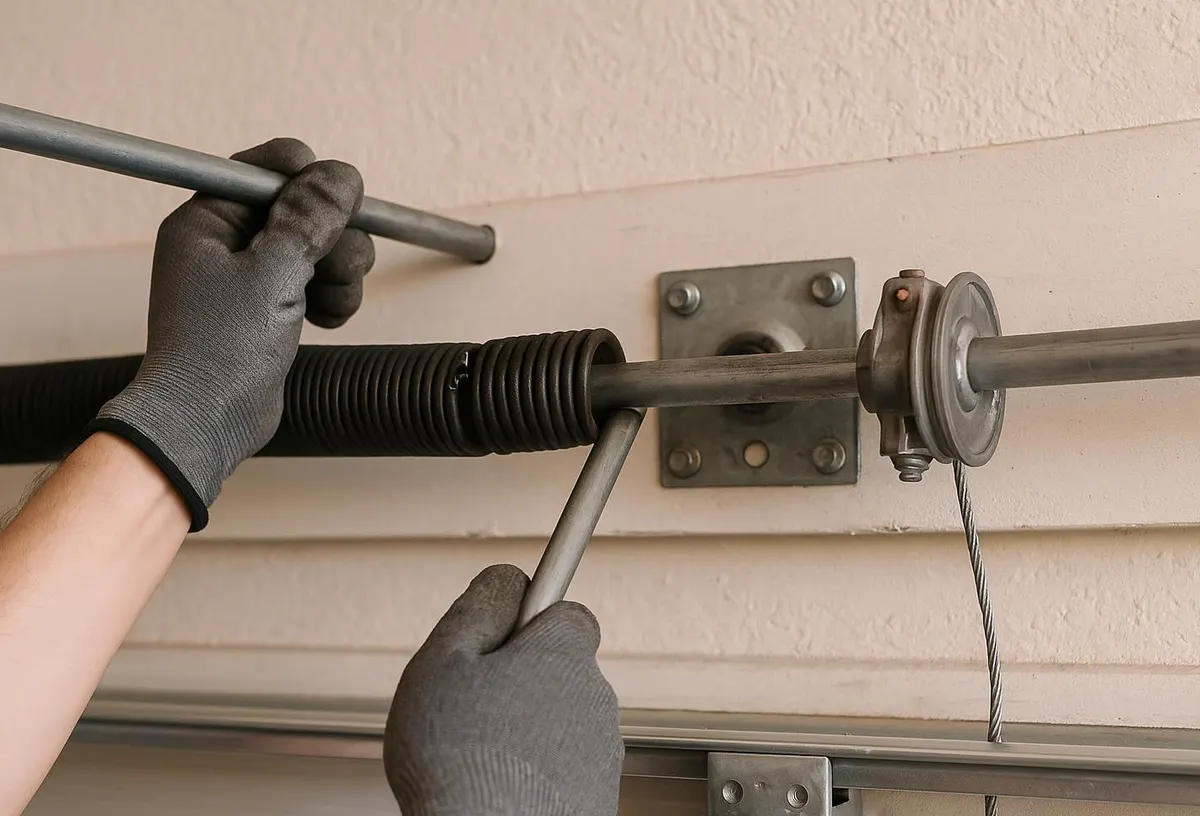
This is also where rust starts showing up on torsion springs and cables faster than it would in a garage that still gets normal airflow from being opened and closed daily. A door that's rarely operated doesn't get the chance to shed that moisture through normal movement — it just sits there holding it.
If You Still Want the Door to Work
Plenty of homeowners don't want to seal the garage door off permanently — they want to keep the option open to turn the space back into a garage someday, or they still use it occasionally for lawn equipment, bikes, or storage overflow. If that's the plan, a few things make a real difference:
- Keep the track clear. Shelving, weight racks, and workbenches built too close to the track are the most common cause of off-track doors in converted garages. The door needs its full range of motion, not just enough to clear your head.
- Don't block the photo-eye sensors. A treadmill, punching bag, or stack of lumber in front of the sensors will make the door refuse to close, or worse, reverse unpredictably. This is one of the most common service calls that turns out to be a placement problem, not a mechanical one.
- Consider an insulated panel. If the original door is being kept in place as the interior wall's outer layer, swapping it for an insulated door cuts down the condensation problem significantly and gives you a real break on temperature swings, not just a cosmetic fix.
- Keep it moving. Even if you never drive a car through it again, running the door up and down occasionally keeps springs and cables from seizing up or rusting in one fixed position.
The Trade-Off Worth Discussing Before You Finish the Room
This is really the crux of the spouse argument: permanently removing the door and framing in a solid wall is more final (and more work) than leaving the door in place behind new drywall. Leaving it in place is faster and cheaper up front, but it means living with a door that's doing double duty as a moisture barrier it was never designed to be. Buyers down the road may also want to know a garage can be converted back — a door that still operates, even rarely, keeps that option on the table. Neither answer is wrong, but it's worth deciding on purpose instead of defaulting to whatever's easiest this weekend.
When to Call Haines City Garage Door Pro
If you're seeing rust forming on the cables or bottom panel, hearing grinding when the door tries to close, or noticing the sensors acting erratic since the conversion, those are mechanical issues worth having looked at before they turn into a stuck door or a snapped cable. We handle off track door repair and garage door cable repair regularly in converted garages across Haines City, Davenport, Winter Haven, and the surrounding area, and we can also walk through whether an insulated panel replacement makes sense for your specific setup. We'll tell you honestly whether the door needs work or whether it's really a placement or ventilation issue first.
If your garage has turned into a gym, office, or workshop and the door is acting up, call Haines City Garage Door Pro. We serve homes and businesses throughout Haines City, FL and the surrounding Polk County area, and we'll give you a straight answer about what's actually going on.